Weapons in Anno 1800 are one of the first industrial goods you’ll produce, and they’re essential for both expansion and defence. As your city grows, you’ll use Weapons to build ships, equip your fleet, and prepare for any conflicts that might arise. Having a steady supply early on gives you a strong strategic advantage.
As the game progresses, your demand for Weapons will naturally increase. At first, you may only need a small amount for basic ships. Later on, larger fleets and more advanced military vessels will require a much higher production rate. By planning your layout with future growth in mind, you can keep your Weapons production efficient, flexible, and ready for whatever challenges come next.
What is produced
This build will focus on producing Weapons in Anno 1800. Since Weapons are a core resource in Anno 1800, they play a major role in both your military strength and your ability to expand. With a steady supply, you can build warships such as frigates and monitors, as well as other important military structures that support your growing empire.
In addition to shipbuilding, Weapons in Anno 1800 are also useful during expeditions. When you load them onto your expedition ship, they provide valuable bonuses: every 50 tons adds +15 Naval Power and +15 Morale. Because of this, carrying Weapons can greatly improve your chances of success on tougher or more dangerous expeditions.

Buildings in this chain
The production chain for Weapons in Anno 1800 relies on several core buildings that work together to turn raw materials into finished Weapons. Along the way, the chain also produces steel and can be extended to create steel beams, both of which are essential for construction and shipbuilding. Because the chain can branch into multiple outputs, the total cost and layout will vary depending on your chosen coal source, either from a Coal mine or a Charcoal kiln.
Weapons production using Charcoal kiln
This setup shows how to produce Weapons in Anno 1800 using a Charcoal Kiln. Although this method works well in the early game, it does come with a drawback. Since Charcoal kilns are less efficient than Coal mines, you’ll need two kilns to match the output of a single mine. As a result, the production chain takes up more space and requires more maintenance.
Even so, Charcoal kilns remain a reliable option when you don’t have access to coal deposits. As you expand to new islands, you can start importing coal instead, which helps streamline your Weapons production and frees up valuable space for other industries.
| Building | No needed | Costs per building | Total |
|---|---|---|---|
| Iron mine | 1 | $800, 4 timber, 5 bricks, -50 maintenance, 50 workers. | $800, 5 timber, 4 bricks, -50 maintenance, 50 workers. |
| Charcoal kiln | 2 | $500, 4 timber, 5 bricks, -20 maintenance, 10 workers, -5 attractiveness | $1000, 8 timber, 10 bricks, -20 maintenance, 20 workers, -10 attractiveness |
| Furnace | 2 | $500, 4 timber, 5 bricks, -100 maintenance, 100 workers, -5 attractiveness | $1000, 8 timber, 10 bricks, -200 maintenance, 200 workers, -10 attractiveness |
| Weapons factory | 1 | $700, 8 timber, 10 bricks, 8 steel beams, -150maintenance, 50 workers, -5 attractiveness | $700, 8 timber, 10 bricks, 8 steel beams, -150 maintenance, 50 workers, -5 attractiveness |
| Total | $3500, 29 timber, 34 bricks, 8 steel beams, $420 maintenance, 320 workers, -25 attractiveness |
Weapons production using coal mine
The next build uses a Coal mine as its coal source. This approach is much more efficient than relying on Charcoal kilns, since it requires fewer buildings and provides a stronger, more consistent supply of coal. However, there is one drawback to keep in mind. The next build uses a Coal Mine as its coal source. Compared to Charcoal Kilns, this method is far more efficient because it requires fewer buildings and delivers a stronger, more consistent supply of coal. However, there is one drawback to consider. Coal deposits are often located far from your main industrial zone, which means the coal must be transported to your Furnaces and Weapons Factory.
Even with this extra distance, the overall efficiency still makes coal mining a reliable choice for supporting a larger steel and Weapons chains. Coal deposits are often located far from your main industrial zone, so the coal will need to be transported to your Furnaces and Weapons factory.
| Building | No needed | Costs | Total |
|---|---|---|---|
| Iron mine | 1 | $800, 4 timber, 5 bricks, -50 maintenance, 50 workers. | $800, 4 timber, 5 bricks, -50 maintenance, 50 workers. |
| Coal mine | 1 | $600, 4 timber, 5 bricks, -50 maintenance, 50 workers | $600, 4 timber, 5 bricks, -50 maintenance, 50 workers |
| Furnace | 2 | $500, 4 timber, 5 bricks, -100 maintenance, 100 workers, -5 attractiveness | $1000, 8 timber, 10 bricks, -200 maintenance, 200 workers, -10 attractiveness |
| Weapons factory | 1 | $700, 8 timber, 10 bricks, 8 steel beams, -150maintenance, 50 workers, -5 attractiveness | $700, 8 timber, 10 bricks, 8 steel beams, -150 maintenance, 50 workers, -5 attractiveness |
| Total | $3100, 40 timber, 50 bricks, 8 steel beams, $900 maintenance, 900 workers, -50 attractiveness |
Iron mine

You can only build an Iron mine on islands that actually contain iron deposits. To check this, start by looking at the resource bar, which lists all materials available on that island. If you prefer a more hands‑on approach, you can also explore the island directly and hover over each mining site to see what resource it provides. Finally, keep in mind that iron deposits are always found near mountains, so those areas are the best places to check first.
To build an Iron mine, you will need the following items:
- $800 credits
- 4 timber
- 5 bricks
- Iron deposit on the island
As well as the build costs, you will also need the following ongoing costs:
- 50 workers
- $50 credits per minute for maintenance
Once these conditions are met, the mine will begin producing four tons of raw iron per minute. As a result, you’ll have a steady and reliable supply to keep your production chains running smoothly. In turn, this con
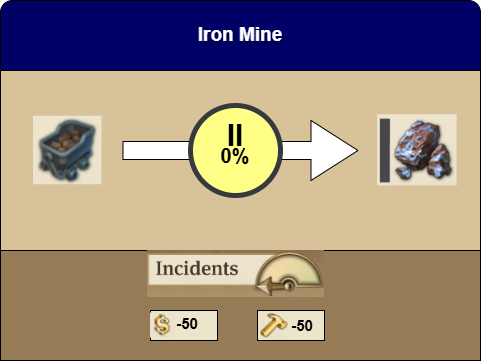
- Function : mines iron ore.
- Limitation : can only be placed on top of iron ore deposit.
- Unlocks : unlocks at 300 workers.
- Depletion : iron mines do not deplete over time.
- Region : available in the Old World and Cape Trelawney
Coal mine
Like the iron mine, the Coal mine can only be built in specific areas of the map. To find the right spot, start by checking which mining sites are designated for coal. Once you’ve located a coal deposit, try to place your Coal Mine as close as possible to your Iron Mine, since this setup creates a more efficient production chain. In addition, remember that the Coal Mine only becomes available once you reach 250 Artisans, so it’s important to plan your progression with this milestone in mind.
To build the Coal mine, you will need the following:
- $600 credits
- 4 timber
- 5 bricks
- Coal deposit on the island
You will also need the following ongoing costs:
- 50 workers
- $50 credits per minute for maintenance
Once these conditions are met, the mine will continuously produce four tons of coal per minute. As a result, you’ll have a steady and reliable supply to keep your Furnace running without interruption. In turn, this consistent fuel flow helps maintain smooth production, preventing slowdowns and keeping your steel chain efficient.
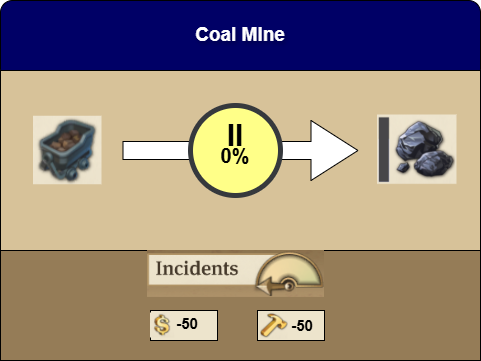
- Function : mines coal.
- Limitation : can only be placed on coal deposits.
- Unlocks : unlocks at 250 Artisans.
- Depletion : coal mines do not deplete over time.
- Region : available in the Old World and Cape Trelawney
Charcoal kiln
The Charcoal Kiln acts as a replacement for the Coal Mine. If your island doesn’t have any coal deposits, you’ll need to build a Charcoal Kiln instead to keep your production running. As you move into the later game, you may decide to import coal from another island, which frees up valuable space on your main steel‑producing island for additional buildings. Even so, the Charcoal Kiln remains essential in the early game, since it provides a reliable source of coal before you have access to mines or trade routes.
To build the Charcoal kiln, you will need the following items:
- $500 credits
- 4 timber
- 5 bricks
- 5×5 tile space plus a radius of at least 227 tiles around it (it will plant its own trees if its not placed in a wooded area).
The following ongoing costs will also be needed to keep the Charcoal kiln going:
- 10 workers
- $20 credits per minute maintenance
Once the conditions above are met, the kiln will steadily produce two tons of charcoal per minute. As a result, you’ll have a dependable supply.
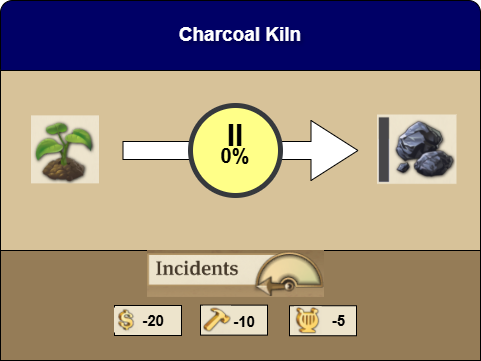
- Function : turns trees in to charcoal.
- Limitation 1 : can be placed anywhere but best placed by trees.
- Limitation 2 : needs a large area for tree planting.
- Unlocks : unlocks at 300 workers.
- Region : available in the Old World, Cape Trelawney and the Arctic
Furnace
The Furnace is the next building in the production chain for Weapons in Anno 1800. The Furnace will take the coal/charcoal and the iron ore and turn these into steel. Steel on its own is an important material in Anno 1800, but in this production chain, the process doesn’t stop there. Instead, the chain continues and transforms that steel into Weapons, which are essential for many mid and late game buildings.
To build the Furnace, you will need the following items:
- $500 credits
- 4 timber
- 5 bricks
- 4×7 tile space
As well as the above, you will also need the following:
- 100 workers
- $100 credits per minute for maintenance
Once these conditions are met, the Furnace will continuously produce two tons of steel per minute. As a result, you’ll have a steady and reliable supply to keep your Steelworks operating without interruption.
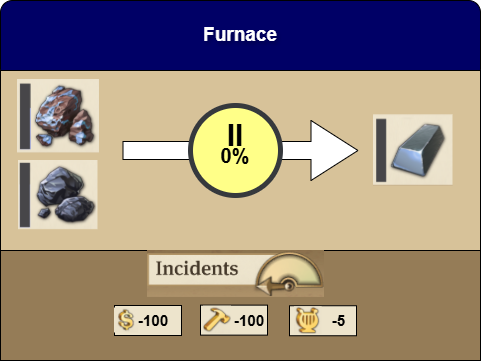
- Function : converts iron ore and coal in to steel.
- Placement : can be placed anywhere.
- Unlocks : unlocks at 300 workers.
- Regions : available in Old World, Cape Trelawney and the New World.
Weapons factory

The Weapons factory is the last building in this chain and produces Weapons in Anno 1800. This is the building that will create the Weapons and enable you to build you ships and your military buildings. The Weapons factory takes the steel and converts it into Weapons.
To build the Weapons factory, you will need the following:
- $700 credits
- 8 timber
- 10 bricks
- 8 steel beams
- 5×7 tile space
As well as the above you will need the following ongoing costs:
- 50 workers
- $150 credits per minute for maintenance
- -5 attractiveness points
Once these conditions are met, the Weapons Factory will reliably produce one ton of weapons every 90 seconds. As a result, you’ll have a steady supply of Weapons to support your expansion. With this output, you can build new ships and construct military buildings, allowing your empire to grow stronger and more secure.
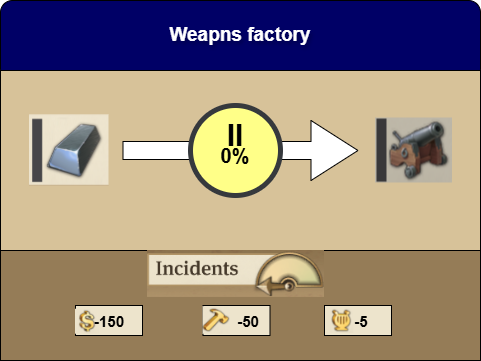
- Function : Convert steel in to Weapons in Anno 1800.
- Placement : can be placed anywhere.
- Unlocks : unlocks at 300 workers.
- Region : Old World and Cape Trelawney.
Technology tree
The technology tree for this production chain is quite complicated because of the number of buildings required to maintain a true 1:1 ratio. For that reason, it’s usually more practical to integrate this chain into your existing Steel beam production chain rather than building it separately. In this section, you’ll find a breakdown of the chain on its own, followed by an explanation of how it fits neatly into the steel beam setup for greater efficiency.

This is the technology tree for the Coal mine option.

This is the technology tree for the Charcoal kiln option.
As we can see from these two production chains showing the basics of producing Weapons in Anno 1800. As we can see here you can use either 2 Charcoal kilns or a single coal mine. The suggestion would be that adding a Weapons factory to the Steel beams production chain would be better than creating a whole new chain.
Layout
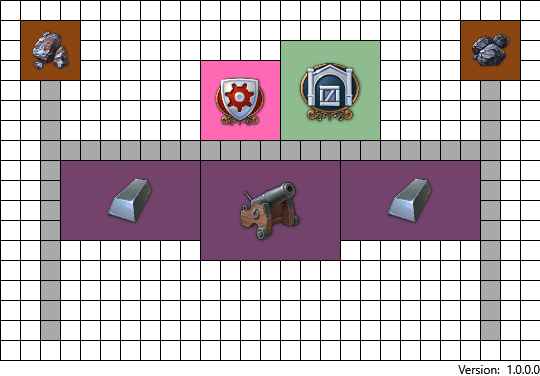
This layout shows how to produce Weapons in Anno 1800, and it also produces extra steel that you can use for other parts of your industry. As your city grows, this surplus becomes increasingly valuable because many advanced goods rely on steel. For instance, Sewing machines and Reinforced concrete both require steel, along with several additional items you’ll unlock later in the game. However, some of these goods won’t become available until you reach the Artisan level and beyond, so this layout helps you stay prepared well before you need them.
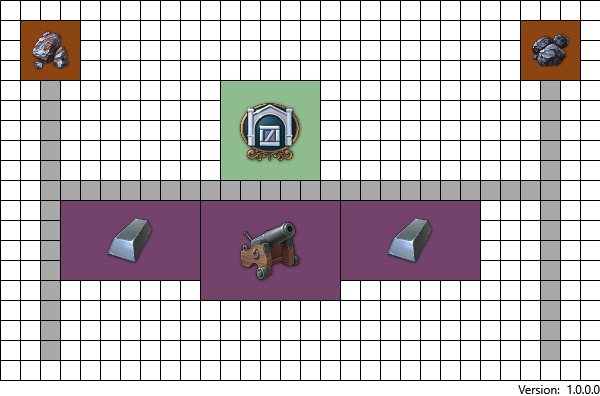
The layout shown above demonstrates a simple setup for early Weapons production. In this configuration, two Furnaces produce steel while a single Weapons Factory consumes it. Since each Furnace generates 4 tons of steel per minute, and the Weapons Factory uses only one ton every 90 seconds, you’ll consistently produce more steel than you need for Weapons in Anno 1800. As a result, you’ll have a steady surplus that can support other production chains as your city grows.
When planning your build, you may choose to place two Weapons Factories instead of one. By doing this, you double your Weapons output, although it does reduce the amount of excess steel you produce. Even so, you will still generate more steel than the factories consume.
For a strong early game start, running two Weapons Factories at the same time helps you build up a stockpile quickly. Once you have enough Weapons, you can simply shut one factory down so that more steel is available for other production chains.
Improving productivity
When you’re looking to improve the productivity of this production chain, the easiest approach is to place a Trade Union nearby. To start, make sure the Trade Union’s radius fully covers every building you want to boost. Once it’s positioned correctly, you can equip productivity items to increase efficiency across the entire chain. From there, you can choose from a variety of item cards that benefit the buildings involved in producing steel and Weapons in Anno in 1800, allowing you to tailor the boosts to your needs.
Trade union cards for Iron mine
Here are some of the best items for the Iron mine.
| Item name | Effect | Rarity/Notes |
|---|---|---|
| Inflammable Concoction | +100% productivity +50% chance of explosion | Common – destroyed after 2 hours of use Expedition bonus – +5 crafting |
| Big Box Dynamite | +200% productivity +100% chance of explosion | Uncommon Expedition bonus – +5 force +4 navel power |
| Ventilator | -50% workforce needed | Uncommon Expedition bonus – +20 crafting |
| Safety Elevator | +35% productivity -25% maintenance costs +30% chance of explosion | Rare |
| Simmons Electrifying Elevator | +40% productivity -35% maintenance costs | Epic |
Trade union cards for Coal mine
Here are some of the best items for the Coal mine.
| Item name | Effect | Rarity/Notes |
|---|---|---|
| Dynamite | +100% productivity, +50% chance of explosion | Common – destroyed after 2 hours of use Expedition bonus – +2 navel power +3 force |
| Miner | +20% productivity | Common Expedition bonus – +10 crafting |
| Freight Elevator | +25% productivity, -15% maintenance costs, +50% chance of explosion | Uncommon |
| First rate Sapper | +30% productivity, +5% chance of extra clay | Good early-game boost |
| Mad Mary | +50% productivity, -75% workforce needed | Rare Expedition bonus – +30 crafting +10 force |
| Michaela the Mining Engineer | +100% maintenance costs, -100% workforce needed | Epic Expedition bonus – +40% crafting +20 force |
| Jorg von Malching, Auger of the Auric | +70% productivity, Occasionally produces oil or gold | Legendary Expedition bonus – +50 crafting +30 force |
Trade union cards for Charcoal kiln
Here are some of the best items for the Charcoal kiln.
| Item name | Effect | Rarity/Notes |
|---|---|---|
| Burner | +10% productivity | Common Expedition bonus – +10 crafting |
| Industrial Thresher | +20% productivity, +10% forest density | Uncommon Expedition bonus – +10 crafting |
| Druid’s Sickle | +30% productivity, +20% forest density | Rare Expedition bonus – +15 crafting |
| Park Ranger | +30% productivity, Occasionally produces Chaoutchouc | Rare Expedition bonus – +30 hunting +10 navigation |
| Miss Rodriguez, The Conservationist | +40% productivity, Occasionally produces Cotton | Epic Expedition bonus – +40 crafting +20 hunting |
| Teutonic Technical Secateurs | +40% productivity, +30% forest density | Epic Expedition bonus – +20 crafting |
| Ursula Green, Guardian of the Forest | +50% productivity, +10% forest density, +8 attractiveness | Legendary Expedition bonus – +45 crafting +35 hunting +25 navigation |
Trade union cards for Furnace
Here are some of the best items for the Furnace.
| Item name | Effect | Rarity/Notes |
|---|---|---|
| Calciner | +40% productivity +50% chance of fire -3 attractiveness | Uncommon |
| Coal Permit | +25% productivity +20 attractiveness | Uncommon |
| Heavy Coal Permit | +40% productivity +40 attractiveness | Rare |
| Bechamel Converter | +60% productivity -1 attractiveness -50% workforce needed | Epic |
| Greens Law to Postpone the Apocalypse | -30% production -80 attractiveness | Epic |
Trade union cards for Weapons factory
Here are some of the best items for the Weapons factory.
| Item name | Effect | Rarity/Notes |
|---|---|---|
| Welder | -30% maintenance | Common Expedition bonus – +10 crafting |
| Wrought Ironsmith | +20% productivity | Uncommon Expedition bonus – +20 crafting |
| Reverberating Furnace | +50% productivity -2 attractiveness +30% chance of fire | Rare |
| Smoke Detector | -50% chance of fire -50% chance of explosion | Rare Expedition bonus – +25 crafting |
| Steely-Eyed Steelsmith | +30% productivity -50% attractiveness +50% maintenance | Rare Expedition bonus – +30 crafting +10 force |
| Lord Footprints Gargantuan Smokestack Act | +55% productivity +60% attractiveness | Epic |
| Master of the Forges | +40% productivity -25% workforce needed | Epic Expedition bonus – +40 crafting +10 force |
| Henri Zanchi, Man of Steel | +50% productivity -50% attractiveness -75% maintenance cost -25% workforce needed | Legendary Expedition bonus – +50 crafting +15 force (Military ships only) |
Using electricity
Iron mine
When an Iron Mine is connected to electricity, its productivity immediately doubles. Because of this, supplying electricity to your mining island becomes one of the most effective ways to expand your steel related production chains. By increasing output so efficiently, you can scale up your industry without building additional mines, which in turn saves both space and workforce.
Coal mine
The Coal Mine’s production doubles as soon as it’s supplied with electricity. Because of this, powering your mining area becomes one of the quickest ways to boost coal output. With this extra productivity, you can support larger steel and Weapons chains without building additional mines, which helps you save both space and workforce as your city grows.
Charcoal kiln
The Charcoal Kiln’s production doubles as soon as it’s supplied with electricity. Because of this, powering your industrial area becomes an effective way to boost coal output early in the game. With this increased productivity, you can support larger steel and Weapons chains without building additional kilns, helping you save both space and workforce as your city develops.
Furnace
The Furnace’s production doubles as soon as it’s supplied with electricity. Because of this, powering your industrial area becomes one of the most effective ways to increase steel output. With this extra productivity, you can support larger steel and Weapons chains without building additional Furnaces, which helps you save both space and workforce as your city grows.
Weapons factory
The Weapons Factory’s production doubles as soon as it’s supplied with electricity. Because of this, powering your industrial area becomes one of the most effective ways to increase the output of Weapons in Anno 1800. With this boosted productivity, you can support larger military production chains or build up a weapons stockpile much more quickly.