Fur Coats in Anno 1800 are a key mid game need, first for Artisans and later for Engineers. As a result, they play an important role in keeping your growing population satisfied. In addition, Fur Coats provide a small Attractiveness boost, which helps enhance your island’s cultural appeal and gradually increases tourist interest.
What is produced
This production chain creates Fur Coats in Anno 1800, an essential need for Artisans and later Engineers. To produce them, you’ll rely on four buildings Cotton Plantation, Cotton Mill, Hunting Cabin, and Fur Dealer and the chain is split across regions.
Because of this, the New World supplies the Cotton, while the Old World handles the final stages, meaning you’ll need to ship Cotton Fabric across the ocean to complete production.
In addition to meeting population needs, Fur Coats provide a small Attractiveness boost, helping draw more tourists to your island. Furthermore, they offer a useful Expedition bonus: storing them on a ship grants +10 Faith, improving your chances during morale based or cold weather encounters.

Buildings in this chain
This production chain relies on four buildings: the Cotton Plantation, Cotton Mill, Hunting Cabin, and Fur Dealer. To start, the Cotton Plantation and Hunting Cabin each produce one ton per minute, while the Cotton Mill and Fur Dealer both produce two tons per minute.
Because of this, the most efficient early game setup is two Cotton Plantations, one Cotton Mill, two Hunting Cabins, and one Fur Dealer. However, as your population grows, you’ll need to scale up your production to keep pace with rising demand.
| Building | Region | No. needed | Cost per building | Total cost |
|---|---|---|---|---|
| Cotton Plantation | New World | 2 | $500 credits, 6 timber, -5 maintenance, 10 Jornelero’s | $1,000 credits, 12 timber, -10 maintenance, 20 Jornelero’s |
| Cotton Mill | New World | 1 | $500 credits, 6 timber, -10 maintenance, 10 Jornelero’s | $500 credits, 6 timber, -10 maintenance, 10 Jornelero’s |
| Hunting Cabin | Old World | 2 | $2,000 credits, 6 timber, -50 maintenance, 10 Workers | $4,000 credits, 12 timber, -100 maintenance, 20 Workers |
| Fur Dealer | Old World | 1 | $2,000 credits, 6 timber, 10 bricks, 8 steel beams, 8 windows, -500 maintenance, 200 Artisans | $2,000 credits, 6 timber, 10 bricks, 8 steel beams, 8 windows, -500 maintenance, 200 Artisans |
| Total | $7,500 credits, 36 timber, 10 bricks, 8 steel beams, 8 windows, -620 maintenance, 30 Jornelero’s, 20 Workers, 200 Artisans |
Cotton Plantation

The Cotton Plantation is the first building in this production chain, and it is only available in the New World. Therefore, your first step is to launch an expedition to discover the region. Once you arrive, you’ll need to find an island with Cotton fertility. After securing a suitable island, the next stage is to establish your settlement and then choose the best location for your plantation.
Because it takes time for your ships to travel between the New World and the Old World, it’s wise to begin producing Cotton as soon as you can. This way, you’ll already have a supply ready by the time you’re prepared to start making Fur Coats.
In order to build the Cotton Plantation, you will need the following:
- $500 credits
- 6 timber
- Cotton fertility on the island
- A 4×4 tile space for the building plus 144 tiles for the fields.
In addition to the above construction costs, you will also need the following ongoing costs:
- 10 Jornelero’s
- $5 credits per minute for maintenance.
Once all of these conditions are met, the Cotton Plantation will consistently produce one ton of Cotton per minute. As a result, you’ll have a steady supply ready to transport to the Cotton Mill and then on to the Old World.
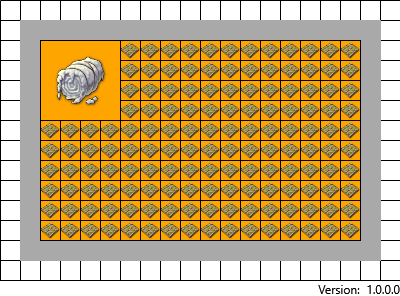
This is a simple layout for one Cotton Plantation. By placing the fields like this, it makes it easier to copy and paste when you want to expand.
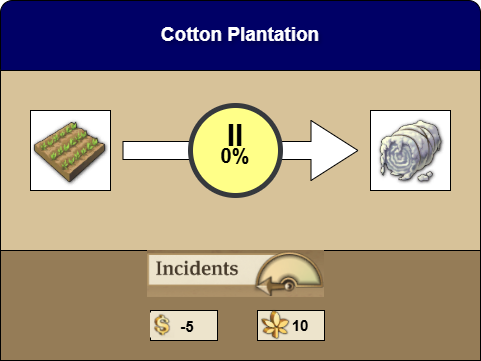
- Function: to produce cotton for the Cotton Mill.
- Limitation: needs to have cotton fertility.
- Production rate: produces one ton of cotton every minute.
- Unlocks: at Artisan level.
- Region: only available in the New World.
Cotton Mill

The Cotton Mill is the next building in the production chain for Fur Coats in Anno 1800. It takes the raw cotton and turns it into fabric ready to be sent to the Old World to be turned in to Fur Coats at the Fur Dealer. It produces cotton at a rate of two tons per minute so needs two Cotton plantations to run at full capacity.
To build the Cotton Mill you will need the following:
- $500 credits
- 6 timber
- A 4×4 tile space
As well as the materials above, you will also need the following ongoing costs:
- 10 Jornaleros
- $10 credits per minute for maintenance
Once these conditions are met the Cotton Mill will readily produce two tons of cotton fabric every minute. As a result, you will have a steady supply ready for the transport to the Old World.
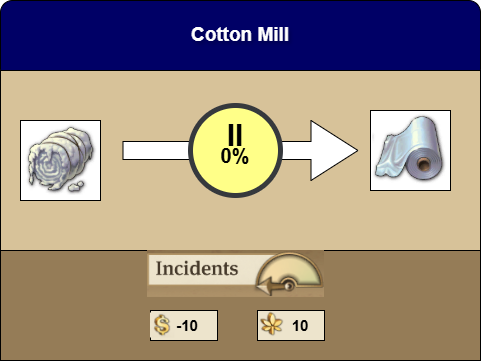
- Function: to turn raw cotton into cotton fabric.
- Production rate: produces two tons of fabric per minute.
- Unlocks: at Artisan level.
- Region: available in the New World.
Hunting Cabin
After your Cotton Mill is running smoothly, the next step in the production chain for Fur Coat in Anno 1800 is the Hunting Cabin. This building supplies the fur needed by the Fur Dealer, and it produces it at a steady rate of one ton per minute.
Because the Hunting Cabin is located in the Old World, it works alongside your imported Cotton Fabric to complete the final stage of the chain.
To build the Hunting Cabin you will need the following:
- $2,000 credits
- 6 timber
- A 5×5 tile space for the building (plus 227 free surrounding tiles).
As well as the above you will also need the following ongoing resources:
- 10 Workers
- $50 credits per minute for maintenance.
Once all of these conditions are met, the Hunting Cabin will reliably produce one ton of fur per minute. As a result, you’ll have a steady supply ready to send to the Fur Dealer, where it can be transformed into Fur Coats.
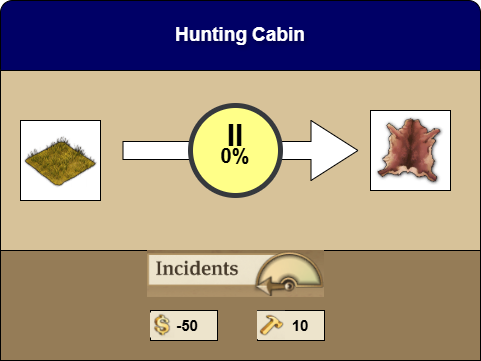
- Function: produces fur ready for transport to the Fur Dealer.
- Limitation: needs to have a clear radius of at least 227 free tiles.
- Production rate: produces one ton of fur per minute.
- Unlocks: at Artisan level.
- Region: available in the Old World.
Fur Dealer

Finally, the Fur Dealer is the last building in the Fur Coat production chain. It combines the Cotton Fabric you import from the New World with the Fur gathered in the Old World and turns them into finished Fur Coats.
Because the Fur Dealer produces two tons of Fur Coats per minute, it requires a steady flow of materials. Therefore, you’ll need two Hunting Cabins to keep it running at full efficiency.
To build the Fur Dealer, you will need the following:
- $2,000 credits
- 6 timber
- 10 bricks
- 8 steel beams
- 8 windows
- A 4×6 tile space for the building.
As well as the above, you will also need the following ongoing costs:
- 200 Artisans
- $500 credits per minute for maintenance.
Once these conditions have been met, the Fur Dealer will reliably produce two tons of Fur Coats per minute. As a result, you’ll maintain a steady supply to keep your citizens are well provided for. The excess can be traded or sent on expeditions to provide your crew with a 10 point Faith bonus per ton.
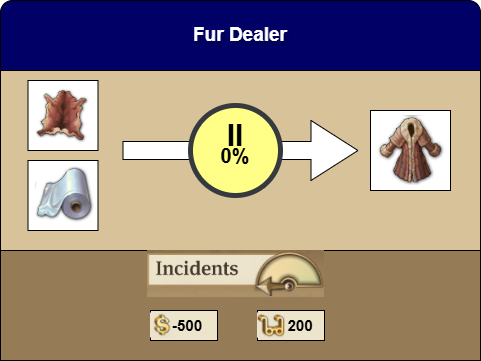
- Function: to turn cotton fabric and fur in to Fur Coats.
- Production rate: produces two tons of Fur Coats per minute,
- Unlocks: at Artisan level.
- Region: only available in the Old World.
Technology Tree
When setting up your Fur Coat production chain, it’s important to keep your buildings balanced so each part of the chain runs efficiently. For this reason, the ideal ratio is two Cotton Plantations, one Cotton Mill, two Hunting Cabins, and one Fur Dealer. With this setup, every building produces materials at the right pace, ensuring the chain runs smoothly from start to finish. However, as your population grows, you’ll eventually need to expand your production to keep up with rising demand.
This setup ensures that your Cotton and Fur all flow smoothly into the final production of Fur Coats in Anno 1800.
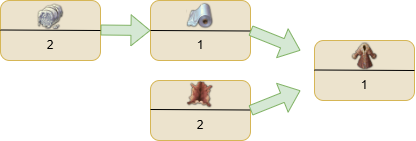
This is the technology tree for the production chain for Fur Coats. You will need to start the Cotton production first as the Cotton fabric will need to shipped from the New World back to the Old World to be combined with the fur to make the Fur Coats.
Layout
To begin with, producing Fur Coats in Anno 1800 requires a fairly complex setup. This is because the chain uses four buildings one farm and one Hunting cabin—so you’ll need a generous amount of space. On top of that, half of the chain operates in the New World while the other half is based in the Old World, meaning you must account for shipping times and transport costs. In this layout, we’ll be using the ratios shown in the technology tree above.
Once everything is placed, the chain will produce two tons of Fur Coats per minute. As a result, your citizens will enjoy a steady supply to meet their needs. Any surplus can be traded or taken on Expeditions for a useful Faith bonus. Finally, make sure the buildings follow the arrangement shown in the diagram, as proper placement is essential for maintaining maximum productivity.
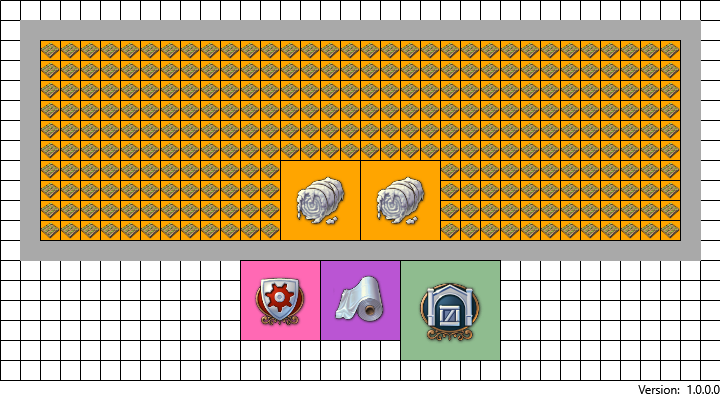
This is the layout for Cotton production in the New World. Once it is produced it will need to be shipped to the Old World.
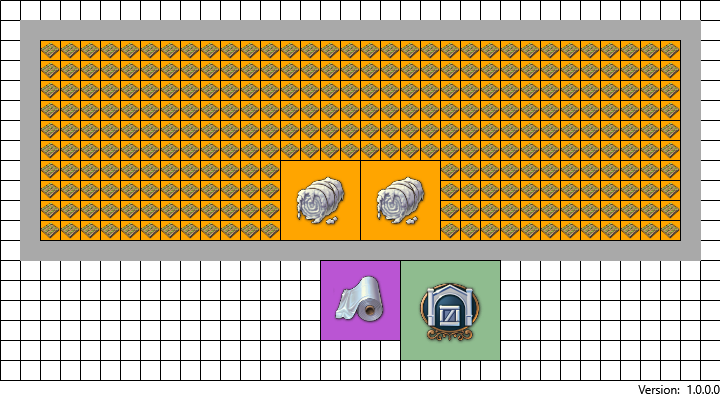
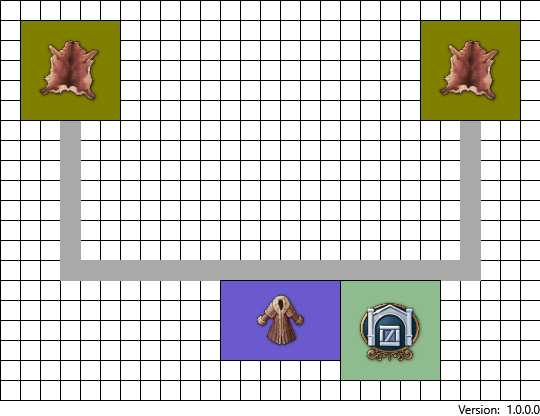
This is the layout for the Fur Coat production in the Old World. It will need to have the Cotton fabric in the Warehouses already to combine with the Fur.
Improving the productivity
On achieving workers you will find that you can now build a Trade Union. Trade Unions can be used for numerous things in Anno 1800. They boost productivity, buildings within the unions radius do not need roads to receive the benefit. As buildings can only be affected by one Trade union at a time it is essential that you do not overlap in your design stage.
For the Fur Coats, the Trade Union will be able to apply to all of the buildings in the layouts both in the New World and the Old World. Make sure to follow the illustrations closely, as this will ensure everything works correctly.
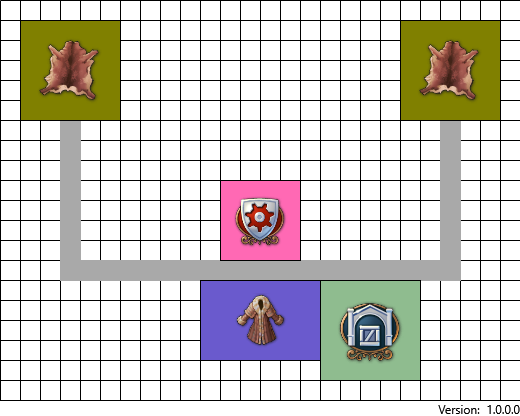
Here we have placed a Trade union in both layouts in order to improve production. The Trade Union covers all of the buildings in the chain.
Trade Union items for the Cotton Plantation
Here are some of the items that can be used to improve the Cotton Plantation.
| Item | Effect | Rarity/Notes |
|---|---|---|
| Picker | +7% productivity | Common, Expedition bonus: +10 Crafting |
| Cotton Seeds | -15% productivity, Cotton fertility provided | Uncommon |
| Tree Surgeon | +12% productivity | Uncommon, Expedition bonus: +20% crafting |
| Arborist | +15% productivity, Occasionally produces Tobacco, -10% modules | Rare, Expeditions bonus: +10 crafting |
| Quality Cotton Seeds | Cotton fertility provided | Rare |
| Horticulturalist Hermann | +20% productivity, Occasionally produces Red Peppers, Potatoes, and Grapes -20% modules | Epic, Expedition bonus: +40 crafting |
| Hybrid Cotton Seeds | +25% productivity, Cotton fertility provided | Epic |
| Dr Ali Al-Zahir, the Botanical Director | +30% productivity, Occasionally produces Red Peppers, Potatoes, Grapes, Grain and Hops, +7 points for attractiveness | Legendary, Expedition bonus: +50 crafting |
Trade Union items for the Cotton Mill
Here are some of the items that can be used to improve the Cotton Mill.
| Item | Effect | Rarity/Notes |
|---|---|---|
| Hat Maker | +10% productivity | Common, Expedition bonus: +5 crafting |
| Mechanical Loom | +25% productivity | Uncommon, Expedition bonus: +10 crafting |
| Power Loom | +35% productivity | Rare, Expedition bonus: +15 crafting |
| Optimised Automatic Loom | +50% productivity, -20% maintenance, -25% workforce needed | Epic |
| The Hopedale Loom | +40% productivity, -25% workforce needed | Epic, Expedition bonus: +20 crafting |
Trade Union items for the Hunting Cabin
Here are some of the items that can be used to improve the Hunting Cabin.
| Item | Effect | Rarity/Notes |
|---|---|---|
| Poacher | +10% productivity | Common, Expedition bonus: +15 hunting |
| Elinor, the Red Reaper | -40% maintenance | Uncommon |
| Industrial Thresher | +20% production, +10% forest density | Uncommon, Expedition bonus: +10 crafting |
| Trap | +25% productivity | Uncommon, Expedition bonus: +20 hunting |
| Trapper | -40% maintenance | Uncommon, Expedition bonus: +25 hunting |
| Druids Sickle | +30% productivity, +20% forest density | Rare, Expedition bonus: +15 crafting |
| Expert Hunter | +30% productivity, Occasionally produces Wool | Rare, Expedition bonus: +10 force, +35 hunting |
| Leghold Trap | +35% productivity, -25% workforce needed | Rare, Expedition bonus: +30 hunting |
| Maimer of Mustelids | +40% productivity, -50% workforce needed | Epic, Expedition bonus: +40 hunting |
| Teutonic Technical Secateurs | +40|% productivity, +30% forest density | Epic, Expedition bonus: +20 crafting |
| Wild Frontiersman Steers | +40% productivity, Occasionally produces Beef | Epic, Expedition bonus: +20 force, +45 hunting |
| Ursula Green, Guardian of the Forests | +50% productivity, +10% forest density, +8 attractiveness | Legendary, Expedition bonus: +45 crafting, +35 hunting +25 navigation |
Trade Union items for the Fur Dealer
Here are some of the items that can be used to improve the Fur Dealers.
| Item | Effect | Rarity/Notes |
|---|---|---|
| Tanner | +10% productivity | Common, Expedition bonus: +15 crafting |
| Dressmaker | +20% maintenance | Uncommon, Expedition bonus: +15 crafting |
| Costume Designer | Processes wool instead of cotton, Employs Workers instead of Artisans | Rare, Expedition bonus: +25 crafting, +15 faith |
| Lily the Fashion Designer | Occasionally produces Ponchos, -40% workforce needed | Epic, Expedition bonus: +35 crafting, +25 medicine |
| Master Craftsman Franke | +40% productivity, Occasionally produces Ponchos, Work Clothes, and Bowler Hats, Processes Iron and Wool instead of Furs and Cotton | Epic, Expedition bonus: +45 crafting, +20 navigation |
| Lady Jane Smythe, Queen of Haute Culture | +50% productivity, Occasionally produces Ponchos and Bowler Hats, +8 attractiveness | Legendary, Expedition bonus: +45 crafting, +25 diplomacy |
Using electricity
Cotton Plantation

The Cotton Plantation cannot be electrified, so will not benefit in any way from having electricity.
Cotton Mill
Providing electricity to the Cotton Mill will double the production rate to four tons per minute. This means you will need to double the amount of Cotton Plantations you will need to keep your production steady.
Hunting Cabin
Like the Cotton Plantation, the Hunting Cabin does not gain any benefit from being inside a powered area.
Fur Dealer
The Fur Dealer does benefit from electricity, and once powered, its productivity immediately doubles. Because of this, electricity becomes one of the simplest ways to boost Fur Coat production without expanding your layout. However, powering the building also increases its input consumption, so you’ll need to add more Hunting Cabins to maintain a steady supply of Fur.